
Search For Products
Popular searches
Trending Products
No sites listed on AdChowk yet
Auto, Cab and Local Transit
Undefined
Overview
What auto, cab and local transit covers
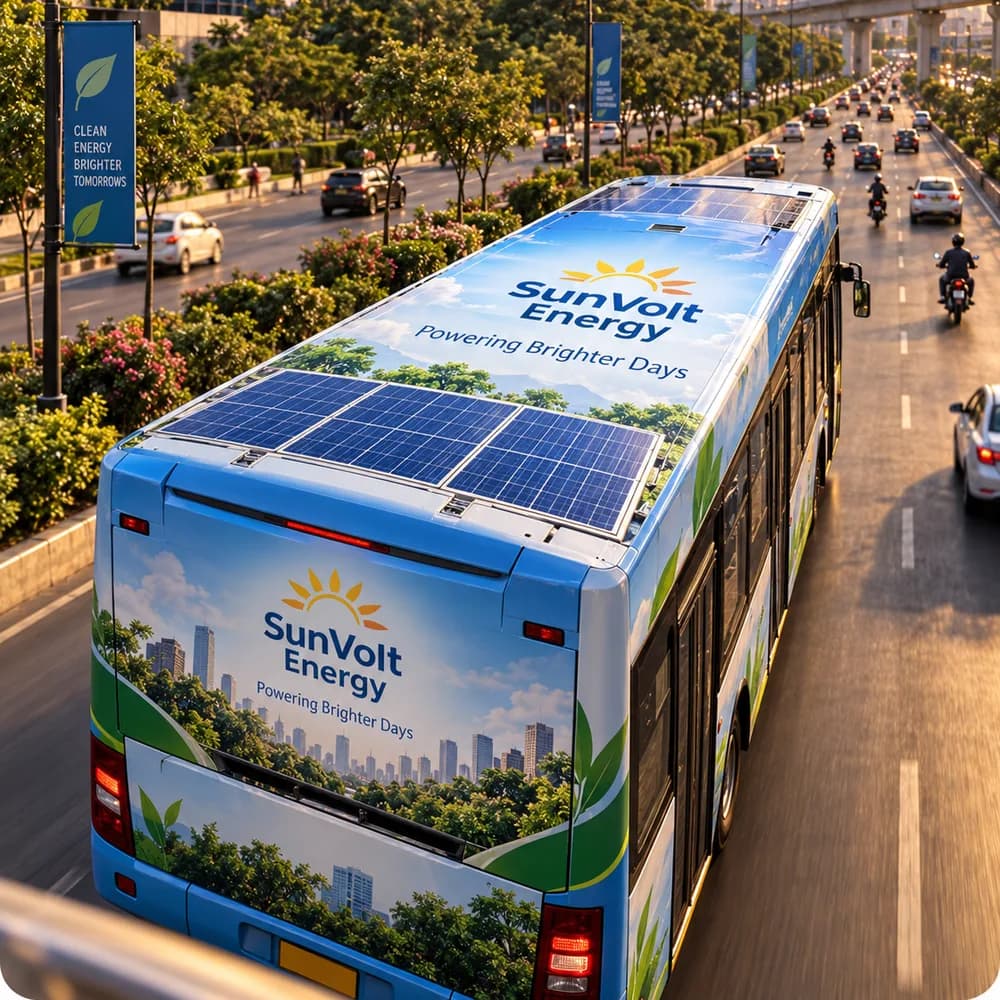
Branding carried on the vehicles that move people around an Indian city every day: auto-rickshaws, e-rickshaws and cycle rickshaws, taxis and app-based cabs, and pooled or shuttle vehicles. The advertising sits on hoods, rear and side panels, full-body wraps, or inside the cabin on headrests, panels and passenger screens. Because the vehicles keep moving, the same campaign is seen across markets, residential roads, offices and transport hubs rather than at one fixed spot.
Who it reaches. Road users, pedestrians and shopkeepers along everyday city routes, plus the passenger sitting inside the vehicle.
Pedestrians, shopkeepers and other road users along everyday routes see the exterior, while the passenger inside sees the cabin panels. A planner should think about which of these two groups the creative speaks to, because the design for a moving exterior differs from one meant for a seated viewer. 12 placement types sit under this category, ranging from rear panels to full wraps, so the choice of format shapes the way the work is planned.
Best for
What auto, cab and local transit suits best
- Local retail
- City launches
- App installs
- Hyperlocal offers
AdChowk lists nothing under auto, cab and local transit yet
The 12 placement types on this page are real and people buy them. AdChowk holds none of them today, so this page describes the category and does not offer a booking.
Placement types
Every placement type under auto, cab and local transit
| Dimension | Medium | Booking unit | Rate basis | On AdChowk |
|---|---|---|---|---|
| Auto-rickshaw back panels | Static / Digital / Wrap | Per site | Per month | Not listed |
| Auto hood branding | Static / Digital / Wrap | Per site | Per month | Not listed |
| Full auto wraps | Static / Digital / Wrap | Per site | Per month | Not listed |
| Auto interior panels | Static / Digital / Wrap | Per site | Per month | Not listed |
| E-rickshaw branding | Static / Digital / Wrap | Per site | Per month | Not listed |
| Cycle-rickshaw branding | Static / Digital / Wrap | Per site | Per month | Not listed |
| Cab door branding | Static / Digital / Wrap | Per site | Per month | Not listed |
| Full cab wraps | Static / Digital / Wrap | Per site | Per month | Not listed |
| Cab headrest branding | Static / Digital / Wrap | Per site | Per month | Not listed |
| Cab interior screens | Static / Digital / Wrap | Per site | Per month | Not listed |
| Cab rooftop displays | Static / Digital / Wrap | Per site | Per month | Not listed |
| Shared-vehicle branding | Static / Digital / Wrap | Per site | Per month | Not listed |
Minimum booking and lead time are not recorded for any of these yet, so those columns are left out. The last column counts the sites AdChowk lists of each type; it is not a stocked flag.
Buying
How auto, cab and local transit is bought
It is bought as a number of vehicles for a fixed period, usually in monthly cycles, in a named city or a defined cluster of routes, stands and hubs. Cost drivers are the panel type, the vehicle count and how tightly you want the fleet concentrated; printing and fitting are one-off jobs at the start of the cycle. What varies most is the permit position in that city, whether the vehicles are route-bound or free-roaming, and whether the operator provides GPS or geo-tagged photo audits.
Planner tip. Decide first whether you want the fleet concentrated around a few catchment areas or spread across the whole city, because the same vehicle count does completely different jobs in each case.
A campaign is generally structured around a vehicle count and a time window, with renewal often handled month by month. Buyers pick a city or a specific set of routes and stands, then decide how tightly to cluster the fleet. The panel type and whether the creative covers a small rear surface or the whole body are decided next. Printing and fitting happen once at the start. It is also worth asking how movement is tracked and what proof of display is provided, because some fleets use GPS-tagged photo proof and others use route logs. Finally, confirm whether the vehicles follow fixed routes or roam freely, since that affects how widely the message travels.
Not sold here
Formats under it that AdChowk does not sell
Each has a page on what the format is and how it is actually bought.
Questions
Questions about auto, cab and local transit
Do I need permission to advertise on an auto-rickshaw or cab in India?
Yes. Advertising on a registered vehicle normally requires permission from the transport authority and, in most cities, from the municipal corporation as well, which may charge advertisement tax. The vehicle owner or the media operator usually holds these approvals. Ads run without them can be ordered off the vehicle, so ask to see the permit position before the campaign starts.
How long does an auto or cab branding campaign usually run?
Campaigns are normally planned in monthly cycles, with three months a common starting point because the vehicles need to be seen repeatedly on the same routes to build recall. Shorter bursts are possible but the fixed print and fitting work makes them less efficient. Longer cycles also give time to replace panels that get damaged.
Can I brand app-based cabs?
Yes, in the sense that taxis and fleet cars registered for commercial use can carry advertising where the local transport authority permits it. The practical route is through fleet owners or media operators who aggregate drivers, rather than through individual drivers. Interior formats such as headrests and passenger screens usually face fewer external approval hurdles than exterior wraps.
What sits under auto, cab and local transit?
12 placement types: Auto-rickshaw back panels, Auto hood branding, Full auto wraps, Auto interior panels, E-rickshaw branding, Cycle-rickshaw branding, Cab door branding, Full cab wraps, and others.
Which of them does AdChowk list sites for?
None today. AdChowk lists no site under auto, cab and local transit, so this page explains the category rather than offering a booking.
What about the formats under it that AdChowk does not sell?
One of them has a page: Auto-rickshaw back panels. Each says what the format is and how it is actually bought.
How does auto and cab branding compare with bus or metro advertising?
The main difference is that Auto, Cab and Local Transit uses small vehicles that move through streets and stop frequently, while the neighbouring formats in the transit family usually serve bigger catchments or fixed stations. That changes who sees the creative and how the routes are selected.
Why does fleet concentration matter in transit branding?
If you choose a tight cluster, the same audience sees the message repeatedly in a small area. If you spread the fleet wide, you get single exposures across many localities. Local retail, City launches and App installs are typical goals for this format, and each needs a different concentration level.
What proof methods are common for moving vehicle campaigns?
Operators may offer GPS-tagged photo proof, route logs or daily photo sets. Ask how the fleet is audited before the campaign starts so you know how display quality is tracked.
Same level
Next to Auto, Cab and Local Transit
About Auto, Cab and Local Transit
Auto, Cab and Local Transit is one of 37 categories AdChowk indexes. 12 placement types sit under it, from Auto-rickshaw back panels to Shared-vehicle branding.
AdChowk lists none of them today. One of them has a page saying what it is and how it is actually bought.
Questions about Auto, Cab and Local Transit
Sites AdChowk holds in Hyderabad
Often booked together in Hyderabad



Looking for auto, cab and local transit?
Undefined
